
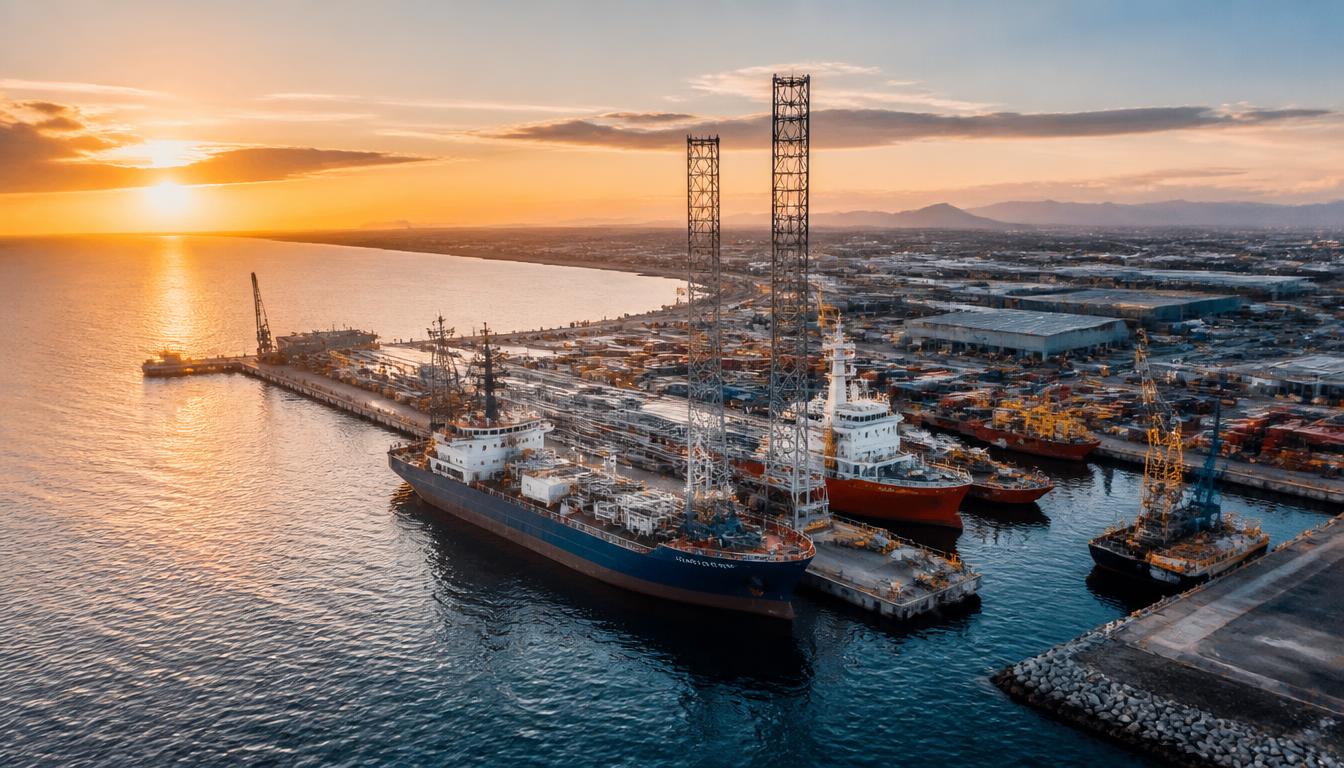
The Backbone of Upstream Operations
Logistics is where upstream plans meet reality. Every drilling programme depends on the right materials, fuel, equipment and people arriving at the right place, at the right time and in the right condition. In Namibia, where offshore operations are growing and supply chains can stretch across borders, logistics performance directly affects safety, cost and schedule.
Effective oil and gas logistics covers marine transport, port coordination, land haulage, warehousing, procurement, customs clearance and dangerous-goods handling. Each link must work together to prevent costly downtime.
Six Logistics Capabilities Operators Need
Marine & Offshore Logistics
Coordinated vessel support, port calls, cargo loading and timely delivery to offshore platforms and drilling units.
Land Transport & Last Mile
Road haulage of equipment, fuel and materials from port or depot to remote operating sites and staging yards.
Warehousing & Inventory
Secure storage, stock control and kitting of critical spare parts, consumables and safety equipment.
Procurement & Sourcing
Sourcing certified equipment, materials, fuel and industrial gases through vetted local and international suppliers.
Compliance & Documentation
Customs clearance, permits, dangerous-goods handling and regulatory paperwork for cross-border movement.
Port & Terminal Coordination
Stevedoring, berth scheduling and liaison with port authorities to minimise vessel downtime.
Logistics in the Namibian Context
Namibia's offshore oil and gas activity is concentrated off the southern coast, with supply bases and ports such as Walvis Bay playing a central role. Operators must coordinate long-distance supply chains, often routing through South Africa, while meeting local-content expectations and environmental regulations.
A local logistics partner with established supplier relationships, port knowledge and customs experience can reduce delays, improve compliance and lower overall operating costs.